Floor-play quality guide
Baby Play Mats and Gyms: A Material, Washability and Quality Guide
The best play space is not the one with the longest feature list. It is the one whose surface, structure, care routine and stage fit make supervised awake play easier to repeat.
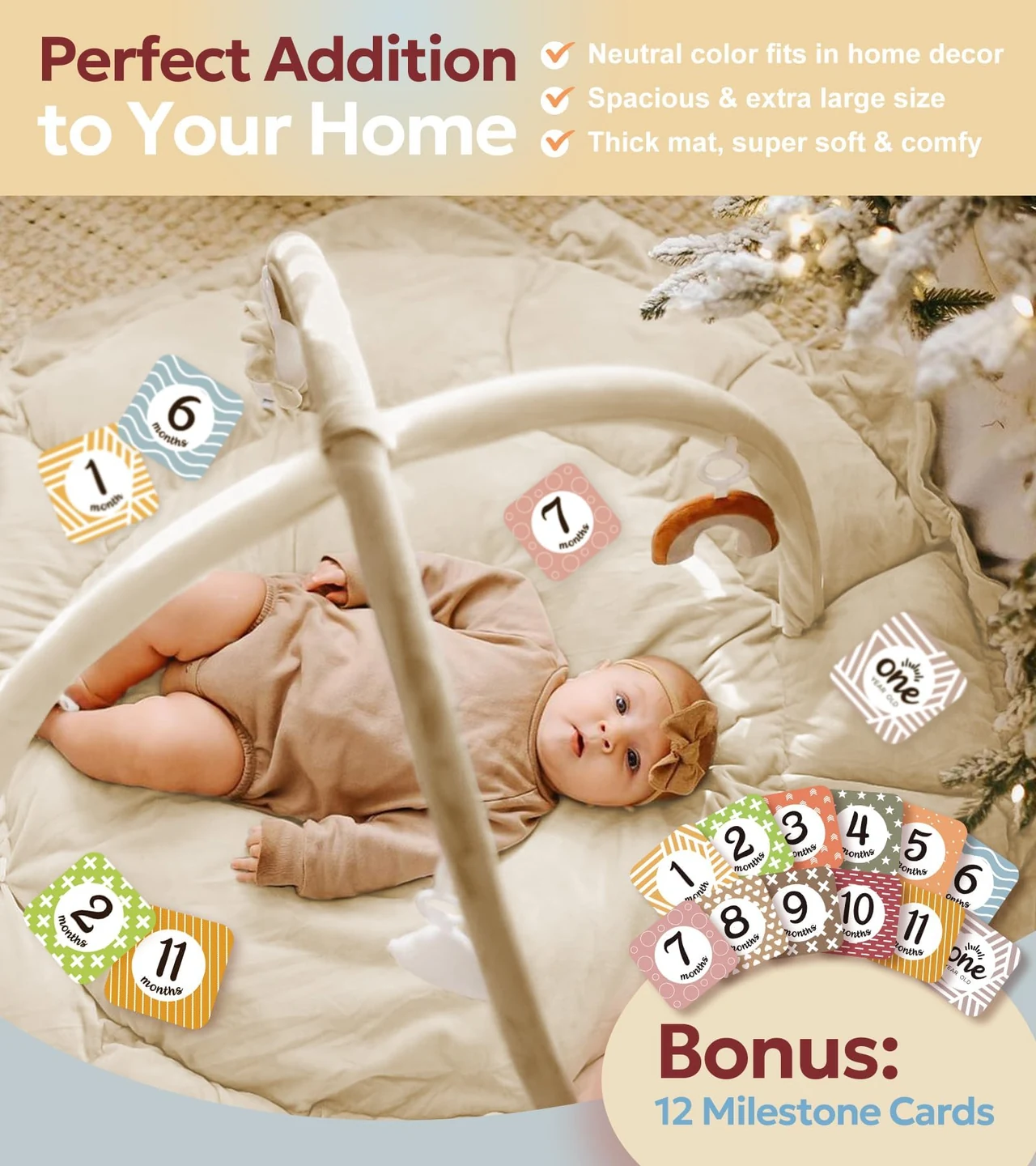
Start with the purpose: awake, supervised floor play
A baby play mat creates a defined place for reaching, kicking, rolling practice and face-to-face interaction. A play gym adds overhead or detachable objects that can invite movement and attention. Those functions are easy to understand, but they are not the same as sleep. The American Academy of Pediatrics consistently separates supervised, awake tummy time from safe sleep and recommends a firm, flat approved sleep surface for sleep. Treat every play mat and activity gym as an awake-play product unless the exact instructions explicitly establish another regulated use.
That distinction shapes the shopping checklist. Softness can make floor time feel inviting, yet a deeper or plusher surface is not automatically appropriate for every activity. Hanging toys can encourage reaching, but their position and attachment need inspection. A removable arch can simplify washing, but it also creates connectors that must be fully engaged. The useful question is how the complete system behaves during the child’s current stage under active adult supervision.
AAP parent guidance describes simple active play—reaching, grabbing, kicking and supervised tummy time—as valuable opportunities for movement. A mat does not perform the development for the child, and a larger collection of toys is not a guarantee of better play. The adult’s presence, the child’s cues and short, repeatable sessions matter. Choose a product that makes it easy to get down on the floor, place a few suitable activities within reach and stop when the child is tired or distressed.
Mallify currently offers flatter washable play gyms with removable toys and milestone cards, plus plush convertible gyms described for several play configurations. These groups differ in surface feel, side structure and visual presence. Comparing them by materials, cleanability, assembly and room fit is more useful than treating every model as the same product in another color.
| Layer or part | Its job | Quality clues | Questions to verify |
|---|---|---|---|
| Top textile | Creates the touch surface and carries printed or stitched details | Even seams, smooth attachment points, color consistency and a surface suited to the stated care method | Is the textile identified, and can the whole mat or only a cover be washed? |
| Padding or fill | Adds separation from the floor and influences firmness | Even distribution, recovery after compression and no unexplained lumps or thin channels | How should it be dried, and does the maker restrict machine washing or heat? |
| Backing | Helps the mat lie flat and may add grip | Flat edges, intact coating or grip pattern and no curling that creates a trip point | What floor types and cleaners are compatible with the backing? |
| Arches and connectors | Position activities above or around the child | Positive attachment, smooth surfaces, stable geometry and connectors that remain inaccessible as intended | Must the arches be removed for washing or when the child reaches a new stage? |
| Detachable toys | Provide visual, tactile or sound variation | Secure seams and fasteners, intact components and age-appropriate size and placement | What is the stated age guidance, and how is each toy cleaned and inspected? |
Words such as soft, plush, cotton or non-slip are starting points. Construction, care directions and the intended configuration determine how those materials work in practice.
Surface quality balances comfort, feedback and floor reality
A play mat sits between the child and the room, so evaluate both sides. On top, look for a continuous surface without loose decorative parts in the main movement area. Run a hand across seams and transitions after assembly. Underneath, check whether the mat lies flat on the actual floor. A backing that grips one sealed surface may behave differently on carpet, tile or a textured rug. Follow the product guidance and keep the surrounding area clear of cords, furniture edges and traffic.
Padding should be described precisely. A mat can be comfortable without being a sleep surface, and a plush pad can change the feedback a child receives when pushing with hands and knees. There is no universal thickness that suits every baby or stage. Use the manufacturer’s intended-use guidance, observe how the child moves and ask a pediatric professional when you have questions about development or positioning. Avoid making a shopping decision from a close-up that does not show scale.
Dimensions matter in two ways. First, the open mat must fit a safe, visible area where an adult can sit nearby. Second, the product needs a realistic cleaning and drying location. Measure the washing machine opening only if machine washing is actually permitted, and measure the drying surface or line needed to restore the mat fully. A large play area that remains damp or folded because it is difficult to clean is not an everyday advantage.
Edge behavior is easy to miss in studio photos. After unfolding, allow the product to settle according to the instructions and inspect corners. A raised edge may belong to a convertible configuration, while an unintended curl can catch an adult foot. Do not place a mat across a doorway or primary walkway. If the model converts into a ball-pit-style or enclosed mode, use only the included parts and the configuration described by the manufacturer.
Color and pattern influence the room, but they also affect visual clarity. A neutral palette can integrate with furniture; higher-contrast graphics may be easier for an adult to use as activity cues. Neither establishes developmental superiority. Look for a design that lets you notice dirt, loose threads and misplaced components, then use the toys and your own face or voice to create variation rather than expecting the print to carry the entire interaction.
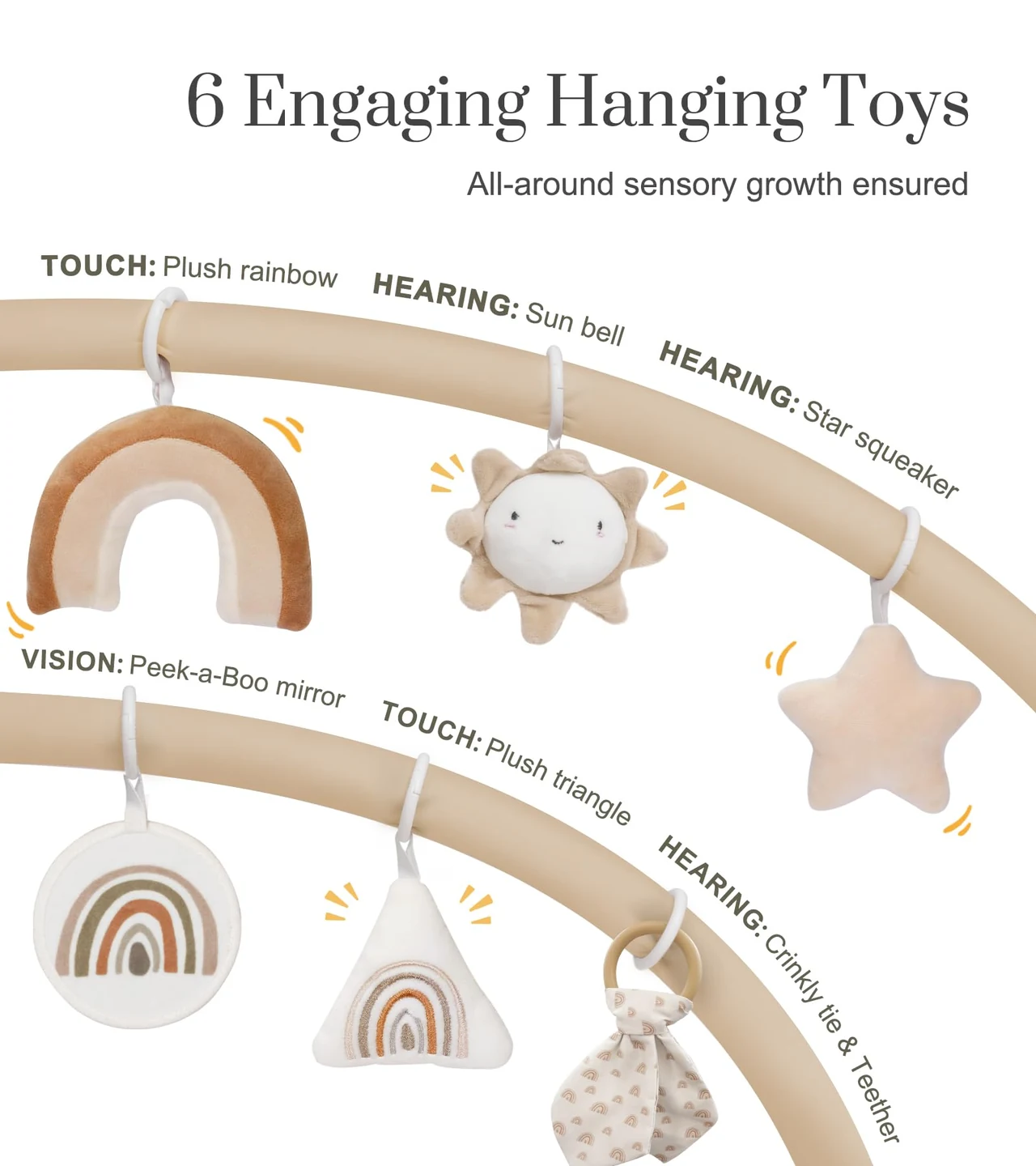
Arches and toys should invite play without complicating setup
Activity arches create a small three-dimensional environment. Inspect how each arch joins the mat and crosses the center. The connection should match the instructions and should not be forced into a different angle to make a toy easier to reach. Before each session, gently check that the supports are seated and that no connector, clip or fabric loop is damaged. Remove the child before changing the structure or repositioning a component.
Toy placement can evolve within the permitted setup. A toy centered above the chest may prompt a different movement than an object placed slightly to one side, but the child’s current reach and the product’s attachment points set the boundaries. Do not add strings, extension loops or unrelated toys to an arch. Added length can change access and introduce hazards the original design did not account for.
Detachable toys deserve their own inspection routine. Look at seams, clips, mirrors, sound components and textured pieces. A crinkle panel, bell or squeaker should remain enclosed as designed. If a toy is torn, a mirror surface is damaged, a clip no longer closes or an internal component becomes accessible, remove it from use. Cleaning directions may differ from the mat, especially when a toy contains a sound unit or reflective insert.
More toys can create clutter. Begin with a small number and rotate only among items permitted for the child’s stage. The goal is not continuous stimulation. It is an opportunity for the child to notice, move and respond while an adult watches. A simple sequence—look, reach, pause, connect with the caregiver—can make a familiar toy useful again without changing the hardware.
Milestone cards and loose accessories belong to adult-led use and storage. They may be helpful for photographs or routine tracking, but they should not remain in the active play area unless the instructions and age guidance allow it. Count loose pieces after a session and store them away from younger siblings. Product completeness is part of quality control in the home.
Washable is only useful when the care process is specific
Washable is one of the most appealing claims in baby gear, but it needs a subject and a method. Does it refer to the complete mat, a textile cover, a removable insert or only the hanging toys? Is the permitted process machine washing, hand washing or surface wiping? What temperature, detergent and drying method are specified? A product page can summarize care; the current label and instructions for the exact model should guide the actual process.
Before the first wash, photograph the assembled product and note the routing of arches, loops and toys. Remove only the components identified in the instructions. Close hook-and-loop fasteners if directed so they do not snag surrounding fabric. Treat stains using approved methods rather than escalating immediately to bleach, disinfectant or high heat. Baby products contain multiple materials, and a treatment suitable for one layer can damage another.
Drying is the hidden half of washability. Thick fill can feel dry at the surface while retaining moisture inside. Spread or hang the product as directed, allow enough airflow and wait until every layer is fully dry before storage or reassembly. Do not place the mat back on a floor while the backing is damp. If the backing relies on a grip texture, inspect it for residue after washing.
Use a small routine between deeper washes. Remove debris, handle spills promptly, air the mat and wipe only the components that permit wiping. Keep pets and outdoor shoes away from the play area when possible. This is not about creating a sterile environment; it is about preventing avoidable buildup and making the next supervised session easy to begin.
Repeated care reveals material quality. Watch for fill migration, seam distortion, peeling backing, fading that hides care labels or loops that stretch. Some cosmetic change is normal, but any damage that affects attachment, creates an accessible component or prevents the mat from lying as intended deserves action. Stop using a compromised configuration until the relevant component can be replaced or the product guidance clarifies safe use.
| Household need | A useful design direction | Tradeoff to plan for | Evidence to check |
|---|---|---|---|
| Frequent compact floor sessions | A flatter mat with quick arch setup and detachable toys | The play area may be more defined by placement than by padded side walls | Open dimensions, connector method and exact washable components |
| A softer, more room-like play zone | A plush mat with convertible side structure | More fill and fabric can require more drying space and careful storage | Material statement, care label, configuration instructions and seam views |
| Moving the setup between rooms | Lightweight sections that break down predictably | Frequent assembly increases the importance of checking connectors | Weight, folded form, carrying method and rules for moving components |
| Visual calm in a shared living area | A coordinated neutral palette and contained accessory storage | Low-contrast finishes may make some residue or loose pieces less obvious | Actual gallery colors, included toy count and a dedicated storage location |
| Several children in the home | Clear age guidance and components that can be counted and stored | Loose accessories need separation from children for whom they are not intended | Labels, toy attachment, small-component warnings and supervision plan |
The number of configurations is not a quality score. Each additional mode must still fit the instructions, the child’s stage and the household’s ability to assemble and inspect it.
Build a play routine the product can support
A repeatable session can be simple. Place the mat on a clean, clear floor where the adult can stay within reach. Check the structure and toys. Begin with the child on the back or in another position consistent with current professional and product guidance, then include supervised tummy time while the child is awake. Use your face, voice and one or two objects. End the session when the child signals fatigue, and move a sleeping child to an appropriate safe sleep surface.
Short sessions reduce setup pressure. AAP materials encourage supervised awake tummy time and gradual practice rather than one long performance. The exact timing and approach should reflect the child’s health and pediatric guidance. The mat provides a location, not a prescription. If the child consistently dislikes a position or shows unusual difficulty, ask a qualified health professional rather than buying additional accessories to solve a medical concern.
As mobility changes, reconsider the whole environment. Rolling can bring the child to the edge of the mat. Sitting can make arches or hanging toys reachable in new ways. Crawling changes the value of a contained surface. Follow stage-related instructions, remove or reconfigure parts only as allowed and expand the clear floor area around the product. A setup that was appropriate last month may need a different arrangement today.
Supervision means attention, not merely being in the same room. Keep phones, food preparation and sibling tasks from turning the mat into unsupervised parking. Position yourself so you can see the child’s face and the attachment points. If you must leave, take the child to an appropriate safe location rather than relying on raised sides, toys or arches to contain movement.
A practical play-mat quality checklist
- Confirm that the product is being used for awake, supervised play rather than sleep.
- Check the exact age, stage, assembly and configuration guidance for the selected model.
- Measure the open play area, adult sitting space, surrounding clearance and drying area.
- Inspect seams, backing, arches, clips, loops, mirrors and sound toys before each session.
- Use only the included or specifically approved attachment points and components.
- Separate care instructions for the mat, cover, fill, arches and detachable toys.
- Dry every textile and padded layer completely before reassembly or storage.
- Reassess the setup when the child starts rolling, sitting, pulling or crawling.
- Count and store loose accessories after play, especially in homes with younger children.
- Stop using damaged pieces that expose fill, hard parts or unreliable attachments.
Quality is what makes another good session easy
A quality play mat supports repetition. It lies as intended on the floor, presents intact surfaces, assembles without guesswork, offers a manageable number of activities and can be cleaned and dried according to clear directions. The adult can inspect it quickly and join the child without turning setup into a project.
Compare Mallify’s flatter washable gyms and plush convertible mats through that lens. Look at the complete galleries for seam placement, toy attachment, side construction and included pieces. Match the design to the room and care routine, not to an abstract idea of the most advanced baby gym.
This article provides general product-selection and care information. It does not replace the instructions for the exact product or individualized medical guidance. Keep play awake and supervised, follow current safe-sleep recommendations and move the child to an appropriate sleep surface if sleep begins.
Further reading
Primary and professional sources
These sources provide general regulatory, developmental or safety context. The instructions for the exact product remain controlling.
Keep reading
More from the Mallify journal
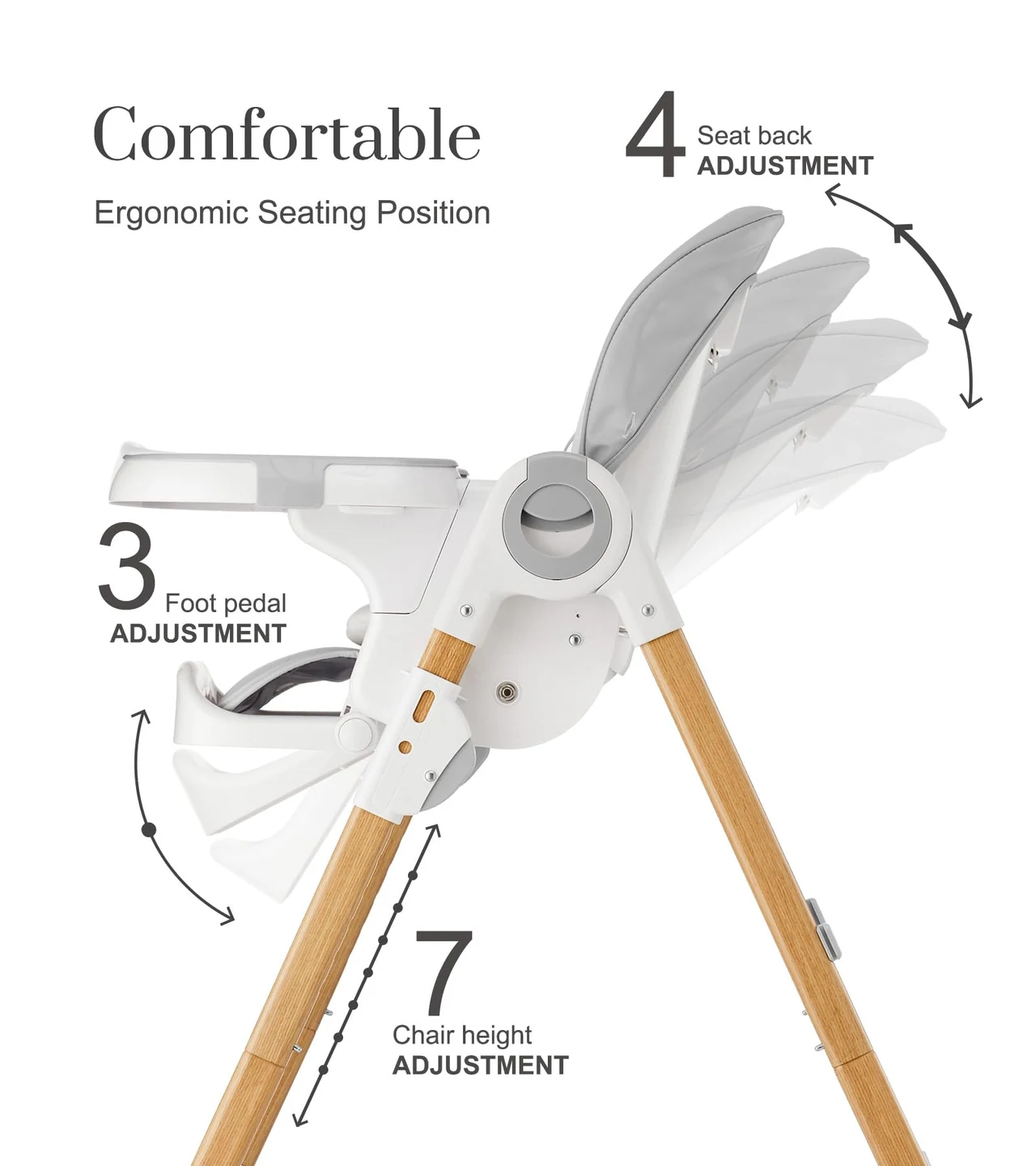
High-chair quality guide
How to Judge a High Chair: Materials, Stability, Cleaning and Everyday Quality
A high chair earns its place through hundreds of ordinary meals. Learn how to read the materials, structure, care details and daily ergonomics behind a polished product photo.
Read the guide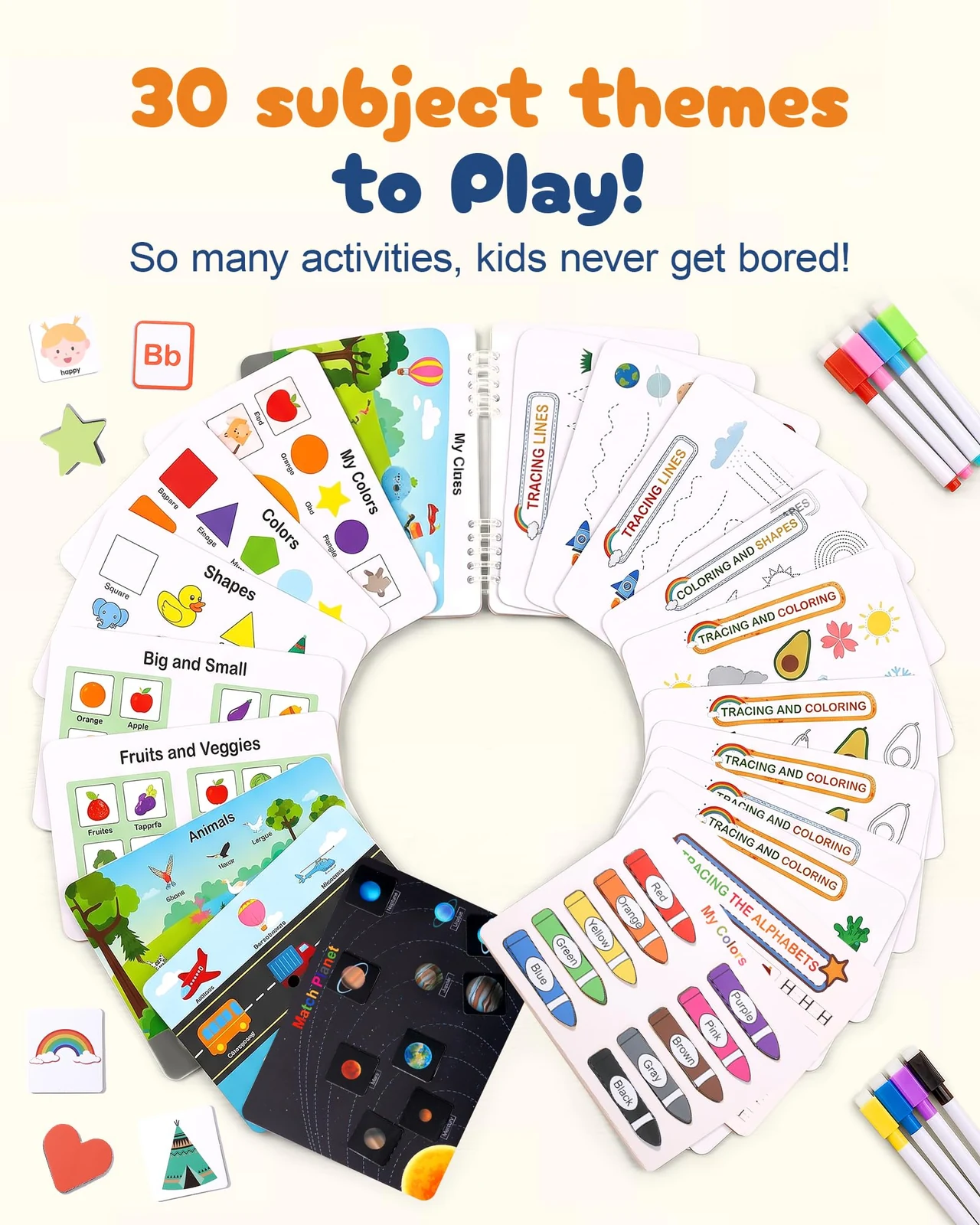
Hands-on learning guide
Choosing a Preschool Busy Book: Materials, Reusability and Meaningful Play
A busy book works best when the materials survive repetition, the activities match the child and the adult knows how to turn matching, tracing and drawing into a real conversation.
Read the guide