Hands-on learning guide
Choosing a Preschool Busy Book: Materials, Reusability and Meaningful Play
A busy book works best when the materials survive repetition, the activities match the child and the adult knows how to turn matching, tracing and drawing into a real conversation.
The material is only valuable when it supports the activity
Busy books sit between a book, a reusable worksheet and a portable activity kit. Their pages may invite matching, tracing, coloring, counting or early writing. Accessories can include hook-and-loop pieces, stickers and markers. That combination makes the category appealing, but it also means quality cannot be judged from the cover alone. The page surface, visual design, binding, attachment method, age guidance and storage system all affect whether the book becomes a repeatable tool or a scattered collection of parts.
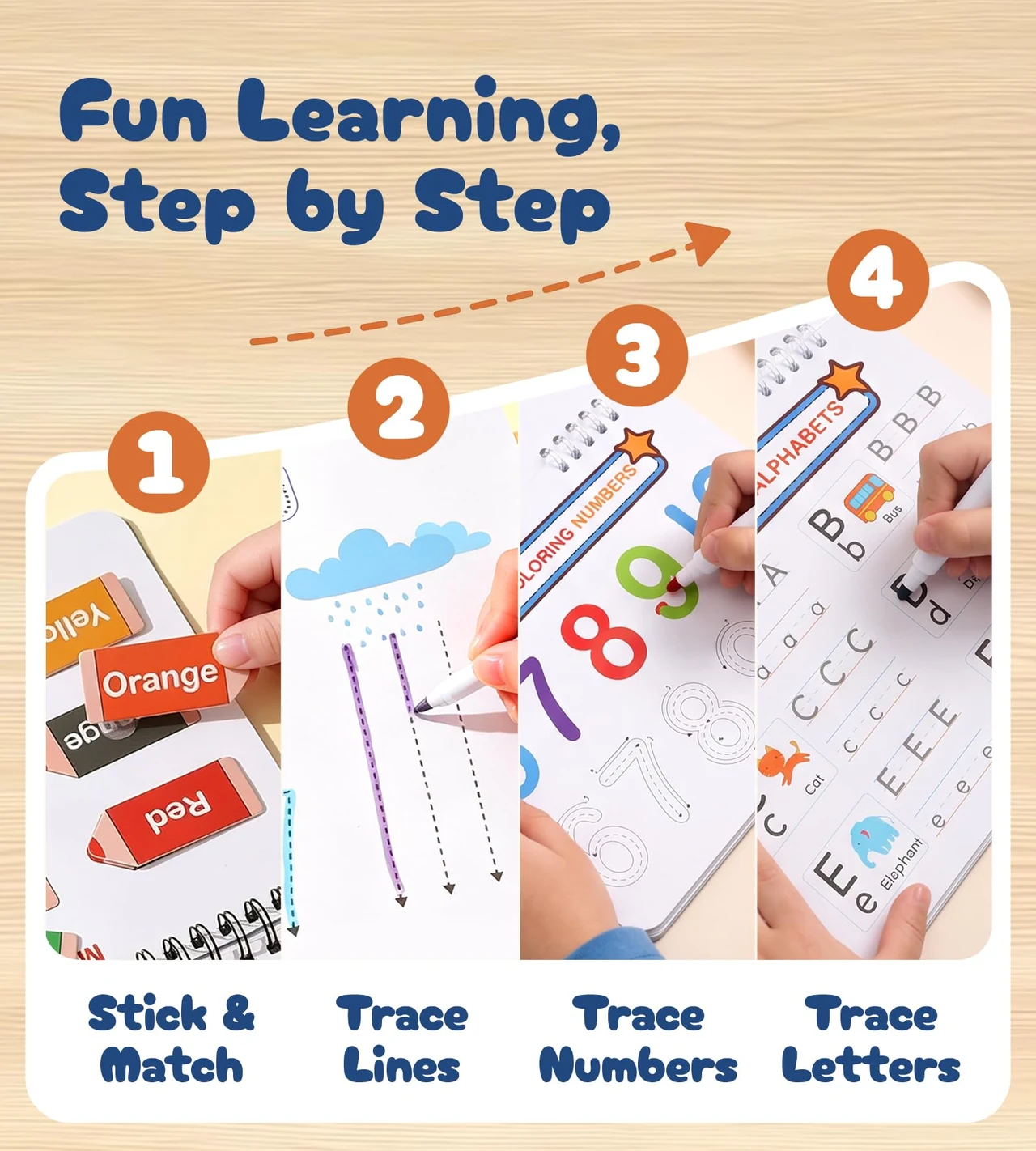
Start with the action. Matching requires pieces that are distinguishable, grippable and able to return to a clear location. Tracing needs lines that can be seen beneath the marker and a surface compatible with the supplied writing tool. Coloring needs enough open space for the child’s current control. Early writing pages should not become a test of tiny typography. Materials earn value by making the intended action legible and recoverable after use.
Developmentally appropriate practice is not a race toward advanced-looking worksheets. The National Association for the Education of Young Children emphasizes active engagement through play, exploration and inquiry. Harvard’s Center on the Developing Child similarly describes playful interactions and games as opportunities to practice attention, working memory and self-control. A busy book can support those experiences, but it does not create them automatically. Adult conversation, choice and the freedom to pause or adapt matter.
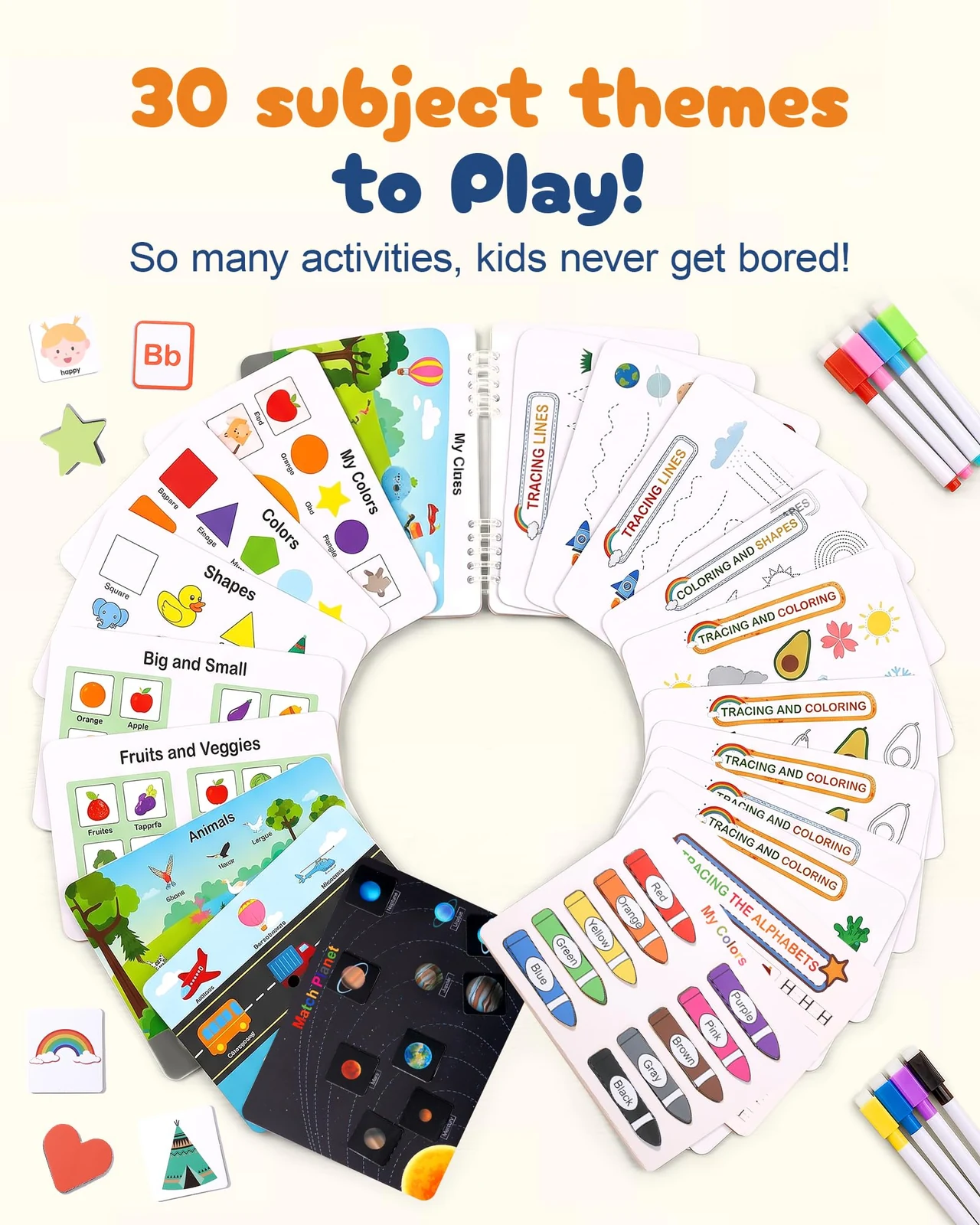
Mallify’s current busy-book listings describe thirty themes across sticker, matching, tracing, coloring, drawing and early writing activities, with markers and separate pieces included depending on the selected set. Those are listing-derived features, not a guarantee that every page suits every child. Compare the exact gallery and included-parts information, then choose activities that align with the child’s interests, fine-motor comfort and ability to manage small components.
| Component | What good design supports | What to inspect | Care and storage question |
|---|---|---|---|
| Reusable page surface | Clear marks, wiping and repeated visual use | Glare, edge finish, print contrast, bubbles or peeling and whether the supplied marker is specified for the surface | What wiping method is directed, and must the page dry before closing? |
| Binding or binder | Pages turn without tearing and can lie open for the activity | Ring closure, spine alignment, reinforced holes and any pinch or sharp-edge concern | Can loose pages be returned in the intended order without forcing the hardware? |
| Hook-and-loop or matching pieces | Repeated placement with tactile feedback | Secure attachment, clean edges, size, graphics and how strongly a piece must be pulled | Where are pieces counted and stored after play? |
| Markers or writing tools | Visible lines that suit the intended reusable page | Current labeling, cap fit, odor, dried tips and compatibility with the page | Are the tools age-appropriate, and what is the approved cleanup method? |
| Printed prompts and graphics | A clear task plus room for conversation and variation | Readable type, visual hierarchy, accurate matching cues and a level of detail suited to the user | Can the activity be simplified or extended without adding unapproved pieces? |
A laminated look, a large theme count or the word educational is not proof of durability or learning value. Inspect how the components support actual use.
Age fit begins with the smallest component and the largest expectation
Age labels are safety and design information, not a measure of intelligence. CPSC guidance explains that toys intended for children under three are subject to small-parts requirements and that toys for older preschool ages may require choking-hazard labeling when they contain small parts. Art materials and writing tools also sit within a wider set of labeling, testing and material requirements. Read the exact package and listing for the selected product. Keep a set intended for older children away from younger siblings even when the older child uses it confidently.
Small-component management should be part of the routine. Count pieces before and after play, use a shallow tray or defined work area and store the closed set out of reach when not in use. Hook-and-loop pieces can travel on clothing, under furniture or into another room. A missing piece is not just an incomplete lesson; it may be an item that needs to be found before a younger child or pet does.
The cognitive expectation matters too. A page can involve simple visual matching, a two-step direction or several symbols and written prompts. Begin with an activity the child can enter successfully. Demonstrate one example, then offer a choice. If the page creates frustration, reduce the number of pieces, cover part of the page or switch to conversation about the pictures. Adaptation is not failure; it is responsive teaching.
Fine-motor demand should be visible in the materials. Pieces that require a strong pull, narrow marker paths or small writing spaces may suit one child and tire another. Observe grip, posture and persistence without correcting every mark. For concerns about motor development or vision, seek guidance from an appropriate professional rather than assuming that more practice with a particular product is the answer.
Page quality is a combination of print, finish and recovery
A reusable page needs readable contrast without becoming visually overwhelming. Check that the main instruction, example and working area are distinct. Decorative backgrounds should not compete with tracing lines or matching positions. If the page uses color as the only cue, think about whether shape, placement or an adult explanation provides another path. Clear design helps a child understand what can be done before an adult supplies the answer.
Surface finish affects both viewing and cleaning. Highly reflective pages may be easy to wipe yet difficult to see under a lamp. Matte-looking films can still require a specific marker and cleaning method. Use only the tools identified for the set. Test a small permitted area if the instructions recommend it, and wipe within the advised interval. Closing a page over wet ink can transfer marks and make two activities harder to read.
Edges and holes receive repeated stress. Turn pages from a supported area rather than pulling a corner against the rings. If the book uses a binder, teach the adult—not the child—to open and close the mechanism unless the age guidance and instructions say otherwise. A misaligned ring can tear reinforced holes or create a pinch point. Retire or repair pages only through methods that preserve the intended safe construction.
Attachment strength should match the user. Hook-and-loop dots must hold a piece during normal handling but should not require the page to be bent sharply for removal. Encourage the child to hold near the attachment rather than tugging from a thin corner. Watch for lifting adhesive, frayed fabric, cracked laminated edges or printed film that begins to separate. Remove damaged loose material from the play area.
Recovery is the overlooked quality. Can the child or adult tell where each piece belongs after an open-ended session? Are markers, caps and stickers assigned a place? A set that takes fifteen minutes to reconstruct may be used less often than one with a clear close-down routine. Before purchase, study the product photos for storage pockets, page attachment and the volume of loose parts, then decide where the book will live.
Markers and art materials need their own quality check
Markers are consumable tools, not a permanent proof of the book’s quality. Inspect the current label and keep caps controlled. CPSC’s art-material guidance explains that markers are art materials and that children’s products may be subject to several requirements involving hazardous substances, lead, phthalates, toy safety, testing and certification. A shopper should not attempt to infer compliance from color, odor or a general non-toxic phrase. Use the supplied information and current product documentation.
Compatibility matters. A marker that wipes from one page finish may stain another. Do not replace the supplied marker with a permanent, paint or solvent-based tool simply because the tip fits. If replacement tools are allowed, follow the book maker’s specification. Keep an absorbent cloth available, protect the work surface and wash hands according to the material directions after the session.
Supervision should fit the materials. An older preschooler may work with some independence while an adult remains available; a child who mouths tools, loses caps or mixes pieces with food needs closer support or a different activity. The right response is to change the setup, not to rely on repeated verbal warnings while leaving unsuitable components accessible.
| Page format | A basic use | A conversational extension | A way to reduce difficulty |
|---|---|---|---|
| Picture matching | Place each piece on the corresponding image | Ask what is alike, what is different and where the object appears in daily life | Offer two pieces at a time or cover unrelated choices |
| Letter or number tracing | Follow the printed path with the approved marker | Say the sound or count objects, then invite a mark that is not graded | Trace with a finger first or choose one large symbol |
| Color and shape sorting | Match by the featured attribute | Sort the same pieces a second way and explain the new rule | Use strongly contrasting examples before similar shades or shapes |
| Line and maze work | Move from start to finish | Predict a route, describe turns and celebrate noticing rather than speed | Use a finger, a wider path or a shorter section |
| Drawing or open writing | Make a picture or copy a prompt | Invite a story about the mark and let the child dictate words to an adult | Remove the model and offer a simple choice of subject |
The extension should remain playful. Stop or change the activity when the child loses interest rather than turning completion into the goal.
Meaningful learning lives in the interaction
A busy book can invite attention, memory, language and fine-motor practice, but those broad skills should not become unsupported promises about a specific child. Use the activity as a shared context. Name what the child notices, wait for a response and follow the child’s idea. If a matching piece becomes a character in a story, that is not off-task. It is evidence that the material can support symbolic play beyond the printed answer.
Offer the right amount of help. First, wait. Then provide a cue such as pointing to the relevant part of the page. Demonstrate only if needed, and return control quickly. Constant correction can make a reusable activity feel like a test. The goal is not a perfect page that photographs well; it is a child who remains curious enough to try another strategy.
Repetition is useful when it changes slightly. A familiar animal-matching page can become a sound game, a category sort, a memory challenge or a storytelling prompt. A tracing page can begin with finger movement, continue with a marker and end with finding the same symbol elsewhere. Reuse is therefore more than wiping the page clean. It is the ability to ask a new question with the same materials.
Independent play grows from an organized environment and familiar expectations. Teach how to choose a page, keep pieces in the work area, use one marker at a time and return the set. Stay close enough to support safe material use. Gradually step back when the child demonstrates readiness. Independence is not measured by how long an adult can leave; it is the child’s increasing ability to manage a suitable activity within a supervised setting.
Travel changes the equation. Loose pieces and markers are harder to control in a car seat area, airplane row or waiting room. Prepare a reduced selection, use a zippered pouch and let the adult manage caps. Never let the book compete with vehicle-restraint use or driver attention. A portable product is only convenient when its component routine fits the location.
Care, inventory and storage preserve the set
End each session with a predictable reset. Wipe pages only as directed, allow them to dry open, recap markers and count separate pieces. Return each item to its intended page or storage area. This routine protects materials and also gives the child a visible ending. A book closed over damp ink or a loose fastener can look damaged the next time it opens even when the activity itself went well.
Inspect before reuse. Check binder rings, page edges, laminated layers, hook-and-loop dots, sticker pieces, marker barrels and caps. Retire torn or peeling components that create loose material or sharp edges. Do not add homemade small pieces to replace a lost part when that changes the product’s age or safety profile.
A durable set is not one that remains cosmetically perfect. It is one whose wear stays within a condition that supports clear, safe use. Light marker ghosting may be less important than a secure binding; a bent storage card may matter less than a lifting fastener. Prioritize function, legibility and component integrity.
A practical busy-book quality checklist
- Read the exact age label, small-parts warnings, included-parts list and marker information.
- Compare page contrast, working-area size and visual density with the child’s current skills.
- Inspect binding alignment, reinforced holes, page edges and attachment points.
- Confirm that the supplied or approved marker matches the reusable page surface.
- Count loose pieces and decide where caps, markers and accessories will stay during play.
- Begin with an achievable activity and offer choice instead of requiring front-to-back completion.
- Use conversation, storytelling and alternate sorting to extend familiar pages.
- Wipe and dry pages according to instructions before closing the book.
- Store the complete set away from children who are younger than its intended age.
- Remove damaged pieces, peeling layers or cracked tools rather than improvising replacements.
Choose for the child who will actually use it
A professional-looking activity set can still be a poor match if the pages are crowded, the pieces are difficult to manage or the care routine is unrealistic. A simpler book can offer richer use when its materials are legible, durable and open to conversation. Quality is the relationship between page design, component integrity, age fit and the way the adult introduces the activity.
Use Mallify’s complete galleries to compare the two busy-book selections. Look closely at page layouts, marker sets, fasteners, separate pieces and storage. Confirm the exact selected listing before checkout because included components can change. Then plan a small, repeatable routine for play and reset.
This guide offers general shopping, play and care information. It does not establish regulatory compliance for a particular product, replace the current label or provide developmental diagnosis. Follow the exact instructions, observe age and small-parts guidance and choose activities that keep curiosity—not completion—at the center.
Further reading
Primary and professional sources
These sources provide general regulatory, developmental or safety context. The instructions for the exact product remain controlling.
Keep reading
More from the Mallify journal
High-chair quality guide
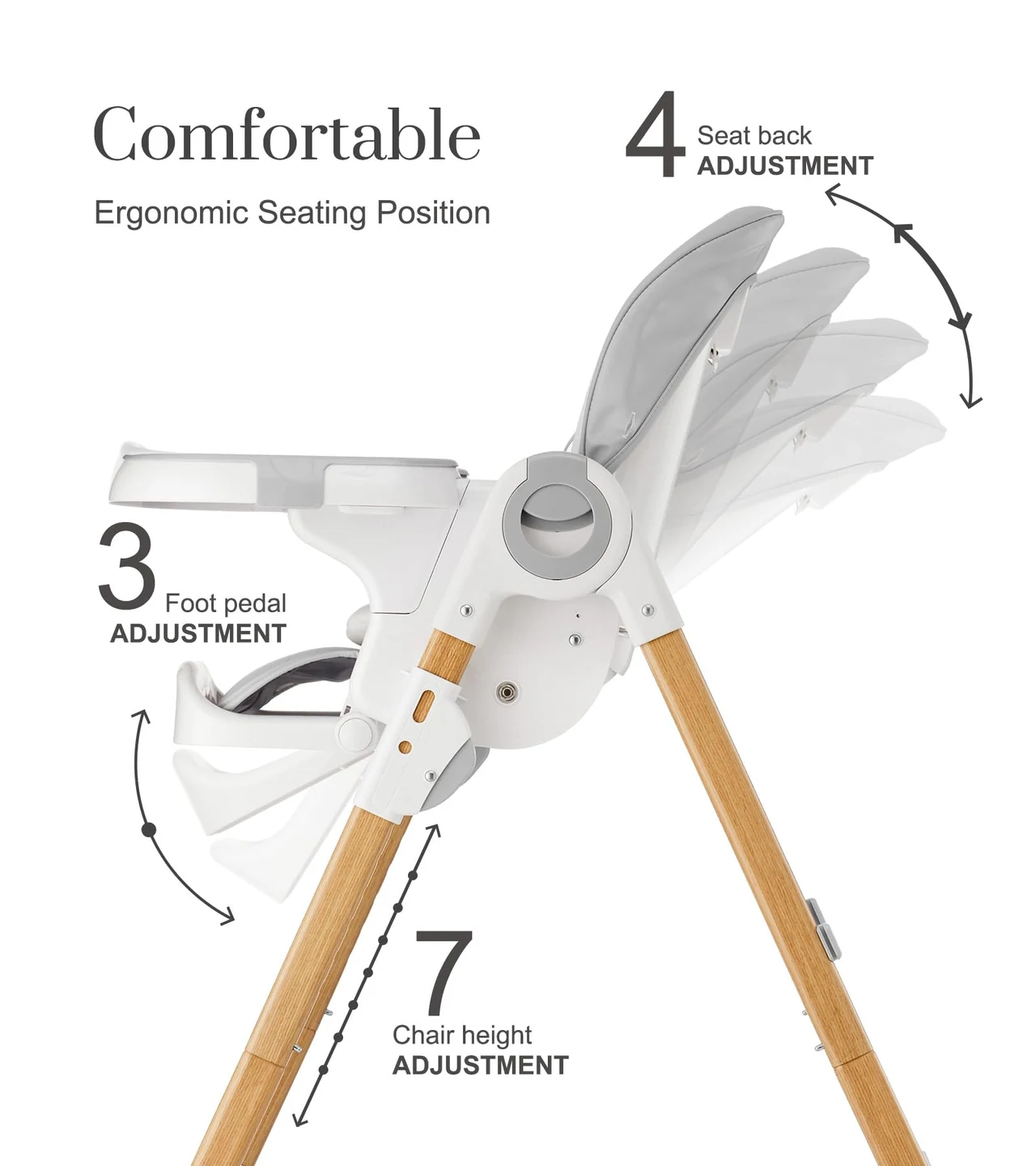
How to Judge a High Chair: Materials, Stability, Cleaning and Everyday Quality
A high chair earns its place through hundreds of ordinary meals. Learn how to read the materials, structure, care details and daily ergonomics behind a polished product photo.
Read the guide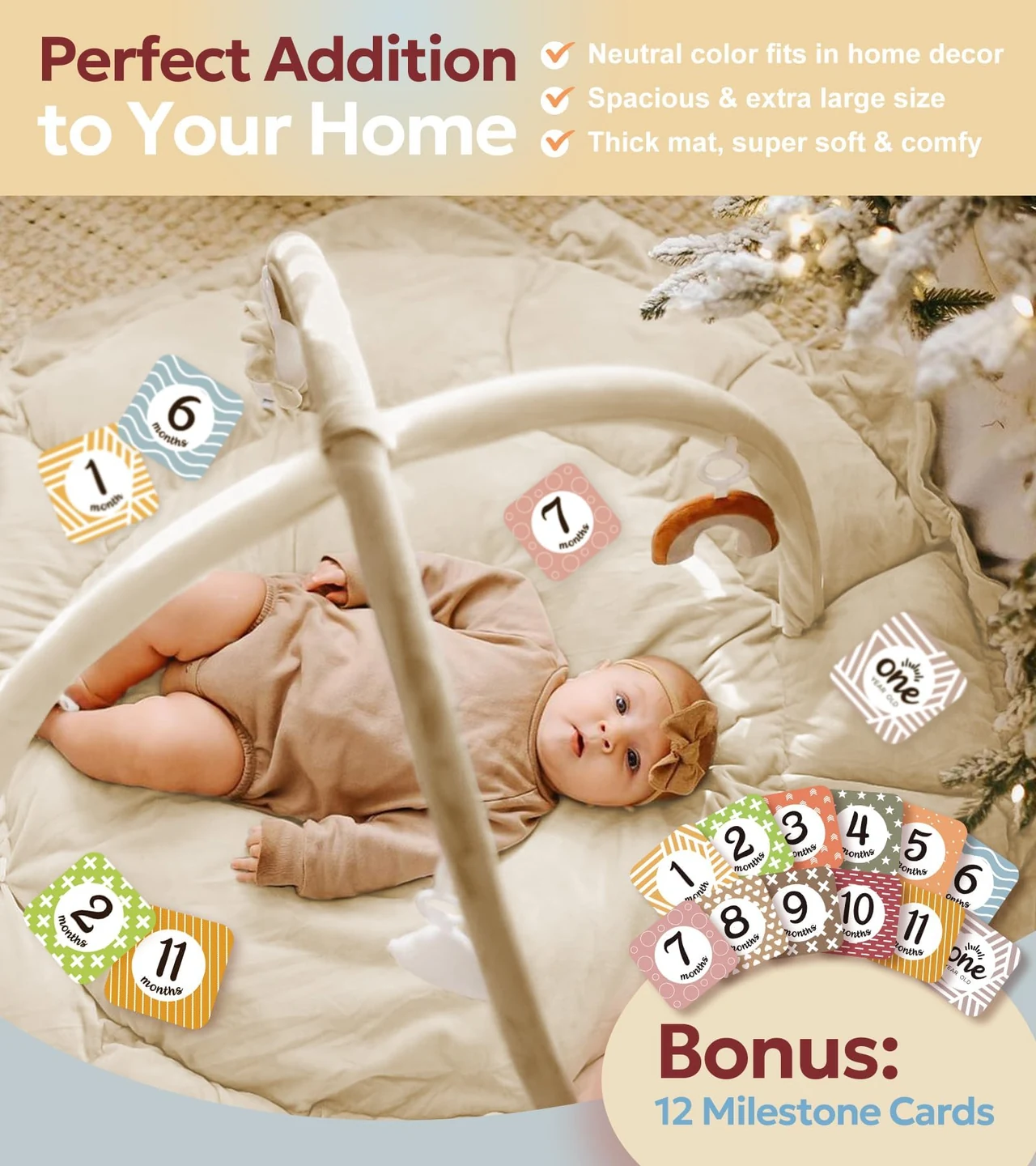
Floor-play quality guide
Baby Play Mats and Gyms: A Material, Washability and Quality Guide
The best play space is not the one with the longest feature list. It is the one whose surface, structure, care routine and stage fit make supervised awake play easier to repeat.
Read the guide